24/11/2015

How Your SEO Plugin Can Deceive You

How Your SEO Plugin Can Deceive You

Link to 2 Create a Website Blog

How Your SEO Plugin Can Deceive You

Posted: 23 Nov 2015 08:41 AM PST

Do Meta Tags Matter in SEO?

I’m continuing with my theme of responding to your emails about your biggest site issues.

A handful of you mentioned that you are struggling with ranking and optimizing your pages (specifically meta tags and understanding how on-page factors influence your rank).

Meta tags are descriptors within your page’s code. The search engines read them and also display them in the results.

Some of you use plugins like Yoast or All in One SEO, and they let you manually enter data for these tags. Or if you have a StudioPress theme (affiliate link) like me, the fields are built into the WordPress editor.

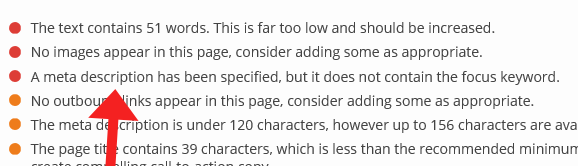
Yoast has a Content Analyzer that encourages you to optimize your meta title, description and other on-page factors.

Yoast SEO Plugin

I must say. Even though I don’t use an SEO plugin, I do think there are helpful aspects of Yoast, and they keep the plugin up-to-date.

But I’ve also noticed many assume meta tags carry more weight than they actually do. I’ve known people to completely stress themselves out over what to enter in those Yoast fields.

You should review Google’s guide that explains how they use the data.

Where The Value Really Lies

If you’d rather watch the video version, see below. If not, continue reading.

If you didn’t get the memo, high quality links are what drive the top 10 results now.

So if you are trying to rank for a competitive keyword, it doesn’t matter what you put inside those meta tags, you need strong links pointing to your site. And don’t forget about internal page linking too.

Now, if it’s a less competitive phrase, then the content on the page and meta tags play more of a role.

But once your content is actually ranking, you can use your meta title and description to get more clicks by making them more engaging. That’s where the real value lies.

Remember my last post about AdSense Contributor? (By the way, that’s an example of an internal. People often forget to link their pages internally.)

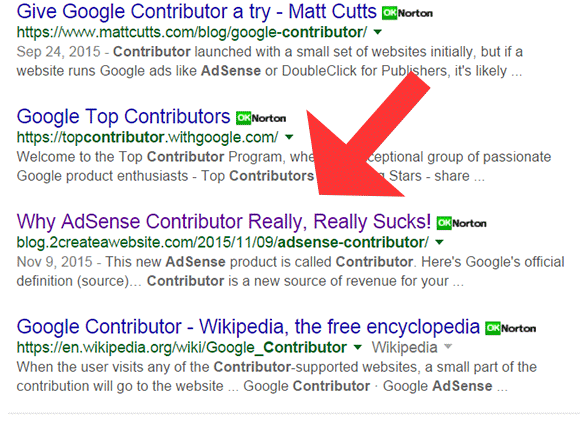
Well here’s how the post looks in the results as of November 23rd.

AdSense Contributor

Are the meta tags helping me rank?

The meta title helps, but largely because I targeted a keyword with low competition.

While I’d love for you to think I’m an SEO Goddess and I can rank for anything I want, no doubt the lack of competition helps. :-)

Also, I don’t even have a meta description. No real reason other than the fact I just forgot to add one. I do this a lot.

But notice the title above.

I wanted to write something that really stands out so if it does rank, it will give people a reason to click.

To me, that’s the real value of meta tags today.

It’s not just about entering your target keywords. Type something interesting to get people’s attention.

Ten years ago, I would put more emphasis on the keywords I insert. Now I look at them more as an assistant for getting clicks once/if the page ranks well.

Yes, they still have value (except for the Keyword tag and engines admit they ignore it), but I personally feel the title and description are more helpful AFTER your site ranks.

And be careful of stuffing too many of the same keywords into these tags. This can actually cause a penalty if you overdo it.

Speaking of stuffing, have a Happy Thanksgiving! Sorry, couldn’t resist. :-)

10/11/2015

AdSense Launches “Contributor” — Um… I’m Not Impressed

AdSense Launches “Contributor” — Um… I’m Not Impressed

Link to 2 Create a Website Blog

AdSense Launches “Contributor” — Um… I’m Not Impressed

Posted: 09 Nov 2015 05:00 AM PST

AdSense Contributor is Just Plain Weird

AdSense has a new feature and I reeeeeeeally don’t get it. This has got to be the oddest monetization model I’ve seen in a while.

Apparently Google believes some people hate ads so much, they’d actually pay AdSense Publishers monthly NOT to see them.

This new AdSense product is called Contributor.

Here’s Google’s official definition (source)…

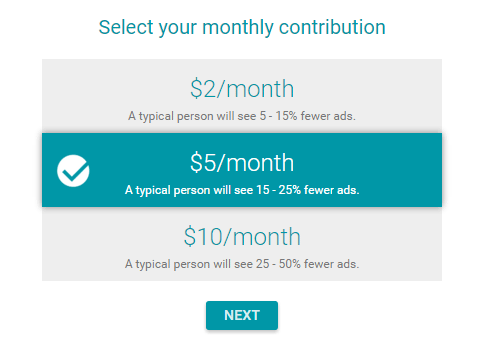
Contributor is a new source of revenue for your sites, funded directly by your site visitors. With Contributor, users pick a monthly contribution level (either $2, $5, or $10) and those funds are used to pay for your site—instead of ads. The result is that users see fewer ads and you still get paid.

Here's how it works: when Contributor users visit a site in Google's network, their monthly contribution is used to bid on their behalf in the ad auction—so they end up buying the ad slot rather than a traditional advertiser. The more they contribute, the fewer ads they see, and you still get paid.

If you decide to use the Contributor feature, you’ll see a badge on your site that looks something like this…

contributor badge

Google explains how to add it and sync it to your account here. Here’s another splash page with more info here.

Wait… Did That Say “Monthly?”

AdSense Contributor

I had to re-write parts of this post because I missed the word “monthly” when I pasted the definition above.

Seriously?

This is starting to look like some weird site subscription or a donation button on steroids.

Look, I’m all about making donations. I have donated to developers of WordPress plugins because I really do think they deserve a little something for creating great free tools.

And then there are people who have a difficult time monetizing their sites due to lack of relevant ads, lack of affiliate programs, etc. This happens a lot with entertainment related sites. Again, that’s where donation buttons are a perfect fit.

But paying a monthly fee to see less advertising seems crazy.

Why Didn’t They Mimic Patreon?

I think what bothers me the most is the spin they used. If they had likened this to Patreon where you support a site you love by giving what you can afford, then maybe I wouldn’t be so critical.

I wonder why they didn’t go with that angle? That might encourage more people to join.

Imagine a very popular blog about a TV show that struggles with monetization. If 500 fans contributed just $2 per month, that’s $1,000/month.

Many of the contributors wouldn’t even care about the fewer ads. They’d just give because they want to support the site. Fewer ads would just be an added bonus.

What About Earnings?

I didn’t see anything in the article about the revenue share.

My guess is they take the same percentage as they do for AdSense clicks and impressions. It’s not clear.

As far as how this impacts earnings, the Contributor is buying an ad slot on your site. So you are getting paid by them instead of the ads that would normally appear in that slot.

How to Disable Contributor

If you want no parts of this odd feature, you can disable it.

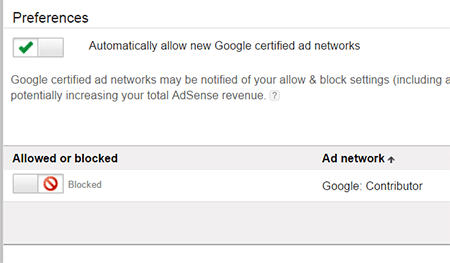
Login to your account and click the "Allow and Block Ads" from the main menu. Now select the 'Ad Networks' tab. Search for 'Contributor', and then turn off that ad network.

Blocked Contributor

Is There Really a Need For This?

If you’ve read any tips about launching a product, there’s always advice about defining a need in the market.

So how does that apply here?

When is the last time you visited a website and thought, “Gee, I’d PAY to see less advertising here! Where do I sign up?”

Probably never.

And remember, you’re only blocking ads on ONE site. What about the rest of the pages on the Internet? Is blocking SOME ads on ONE site going to be THAT valuable to people?

Plus, as Mark pointed out on Twitter, websites often use other ad networks too.

If ads bother you that much, you can cough up $10 bucks for ad block software. And that’s a ONE-TIME fee, by the way. Not monthly.

Maybe it’s just me, but I’d rather support a site with a one-time donation or buy a product (if applicable). Ads don’t bother me that much! And if they happen to bother you, there are less costly ways to remedy that.

I would rather people support my site by buying a course or use an affiliate link. Not to mention, it’s cheaper in the long run!

Seriously, am I missing something here? Please tell me I am.

I swear… the more I type, the more I keep shaking my head. So I better end this post before I get dizzy. :-)

What do you think of this?

03/11/2015

Does The Fear of Your Website Failing Paralyze You?

Does The Fear of Your Website Failing Paralyze You?

Link to 2 Create a Website Blog

Does The Fear of Your Website Failing Paralyze You?

Posted: 02 Nov 2015 08:44 AM PST

Are You Paralyzed by the Fear of Failing Online?

I’m still combing through the oodles of replies that were sent when I asked what you struggle with the most.

Certain answers like “I need more traffic” or “I need content ideas” were not a surprise (I addressed those struggles in this post), but a lot of you are stuck in the “getting started” mode.

Some of you explained why you haven’t started (lack of time or money), but many mentioned the F-word.

No, not that word. 😮

I’m talking about FEAR as it relates to failure.

And now that I think about it, I shouldn’t be too surprised that fear is a big problem. I was reminded of this last year when I published this video…

I don’t think I’ve ever had a video get over 400 likes. After reading the comments, I could tell this one struck a chord.

“But What If I Never Get Any Traffic?”

It’s demotivating and even scary to consider that you could actually spend precious time and money on a website that no one ever visits.

It’s not a good feeling.

I’ve actually created more failed sites than successful ones, and it never feels good when you work hard on something that doesn’t take off.

Truthfully, there is nothing I (or anyone) can tell or give you that will guarantee that won’t happen, but here’s how you improve your chances for success.

A big reason people never get traffic is they don’t take the time to identify a need in a market.

You might be tempted to create a website on an idea or concept YOU think is cool, but is there a real need in the market for this?

Here are some ways to investigate this…

  • Check Google Trends – is the topic trending or declining?
  • Research forums – look for recurring issues/problems in a niche
  • Ask friends in the niche (if applicable) what they struggle with the most
  • Check the reviews of relevant products in your potential niche on Amazon.com to discover common problems

Obviously there are many other reasons why sites never get traffic, but not meeting a need is a biggie!

Having Trouble With Your Angle?

Because Google has made it much more challenging to get traffic from simply writing keyword-focused content, developing an angle is more important than it’s ever been.

When your site is unique and refreshing, it’s much more likely that it will grow organically.

I still believe this is the key to standing out, and if you are not getting any traffic, this may be one problem.

Many of you admitted that you fear your site is not unique enough, or you don’t understand what it means to develop an angle.

I’m always looking for examples to illustrate this point, and I found another person who did it right.

When it comes to weight loss, a lot of people would just create a generic weight loss blog with recycled tips.

However, I think it’s a better idea to pick out one aspect/problem with weight loss and build a site around that.

Cranky Fitness

Cranky Fitness made the list for the best weight loss blogs of 2015.

The owner, Jan Graham, went against the grain. Instead of the upbeat, rah-rah posts that flood the weight loss blogosphere, she actually focuses on the negative aspects.

Jan does an excellent job of mixing humor, brutal honesty and helpful information that her readers can relate to.

And for those of you who refuse to spend money on a website, you might be inspired to know that Jan used Blogger — Google’s free blogging platform. (I still don’t endorse doing this, by the way. Just sayin’.)

What’s also interesting is that almost all the websites on that “top list” were websites with a personal component. For many niches, especially a topic like weight loss, this goes over extremely well.

In the age of blogging and social media, people enjoy getting to know the person behind the site. They are naturally drawn to bloggers they can relate to.

I’m a big believer in looking for a specific aspect or sub-topic within a niche. That’s exactly what I did with my natural hair site and I discussed it in this revealing podcast.

Why Is Failure So Bad & What’s the Source of Your Fear?

Let’s get to the nitty gritty. Why is failure so scary?

Even if you don’t have the success you desire at first, you can always adjust and move your site in another direction — which is what happens with most of us.

Truthfully, that’s not really failure. It just means this might take longer than you want it to.

Is Your Fear Based on Financial Issues?

Now, if your fear comes from the fact you might spend money on something that won’t work…  that’s completely understandable.

I certainly don’t want to be insensitive to someone who doesn’t have money.

So I’ll give you a pass if you fit in that category. :-)

But I will say this… most people spend more money in a month on Starbucks, shopping or alcohol than they do on a website.

Sometimes it comes down to priorities.

Look at it like this. You’d never be able to start an OFFLINE business for so little money. That’s what I love about making money online!

Is Your Fear Ego-Driven?

I always find it interesting when people say they are afraid to fail because of what others might say or think.

Most of those people you are trying to please, aren’t even worth your time. And as I mentioned in the above video, sometimes it’s best to keep things to yourself.

Why is it even necessary to announce to the world what you’re doing just yet?

Are You Making Excuses?

As I’m typing this, I’m starting to wonder about some of the other reasons you gave for not starting yet.

  • “not enough time”
  • “not techy enough”
  • “can’t decide on a WordPress theme”
  • “can’t decide on a name”
  • and more

For some of you, these may be the real reasons.

But for others, I can’t help but wonder if you are covering up your fear of failing. As a result, you are paralyzed.

Here’s the hard truth…

I can't guarantee you won't stumble, but I can guarantee you'll never succeed if you don't start.Click To Tweet

Not starting is far worse than failing because you’ll never learn and you’ve robbed yourself of an opportunity that can end up being incredibly rewarding.

And so what if you ultimately make mistakes? The worst thing that will come of it will be some lesson you can take with you.

Is that really such a horrible thing?

I hope this post gives you the nudge you need to stop procrastinating and take that first step.

Just do it!

27/10/2015

If You Need Traffic, Content Ideas, Motivation or Tech Help, Read This Now!

If You Need Traffic, Content Ideas, Motivation or Tech Help, Read This Now!

Link to 2 Create a Website Blog

If You Need Traffic, Content Ideas, Motivation or Tech Help, Read This Now!

Posted: 26 Oct 2015 09:21 AM PDT

How to Get More Traffic, Motivation, Content Ideas and More

Many of you replied to my last email about what you struggle with and I read every single reply.

Thank you so much for taking time to do that. Whew! It was a lot of email to read, but so insightful!

In case you missed the email or you aren’t a subscriber (sign up), here’s what it said…
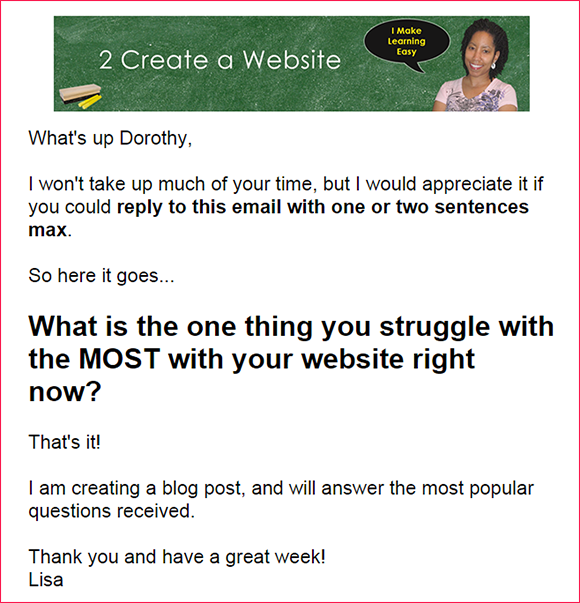
email sent to subscribers

I sent an email like this several years ago, but haven’t done it since.

Pat Flynn recently did this with his list, and it reminded me of how useful this exercise really is.

It’s such a simple, yet effective strategy that not only reminds your subscribers you are here for them, but it also helps you ensure you are publishing content and products that are helpful.

So I’m going to address the four most popular responses which pertain to motivation, traffic, content ideas and technical help.

Here it goes…

If You Lack Motivation…

boredom

Many of you replied and said you just don’t have the motivation to keep going. You start out feeling hyped and energized, but it doesn’t last.

Lack of motivation can come for several different reasons:

  • busy personal life
  • lack of ideas
  • no direction
  • wrong topic
  • failure (or fearing it)

Maybe you thought the desire to make money would be enough to keep you going.

That works for a moment, but it gets old when failure sets in or your expectations aren’t met.

I don’t believe the desire to make money is enough for most people. If it was, almost everyone who wanted to make money online would be doing so.

Yes, money can be part of your motivation, but you need to find something else because 95% of people who set out to make money online don’t see success immediately.

So what is going to keep you going while you find your way?

You need SOMETHING to keep you motivated.

And if you’re beating yourself up for not having the success you desire yet, STOP!

You’re actually in the majority. People who get it right the first time are in the extreme minority.

Have you ever listened to a podcast or interview of someone who is successful online?

Did you notice how most discuss how many failures they had before the succeeded? Believe it or not those failures are gifts because they cause you to keep going back to the drawing board until you find something that sticks.

I’ve said this before, but I still believe that people who are successful find avenues that directly align with their enjoyment and talents.

People who are successful...

Why are you trying to become a top blogger when you hate to write?

Why are you trying to tell people how to make money online with an MLM program when you don’t really like MLM and aren’t even succeeding with the program yourself?

Do you see how inauthentic that is? That can’t be fun or motivating at all!

And if you’re saying to yourself that what you enjoy can’t lead to income, I would beg to differ. You’d be surprised at how many different ways people are using the net to make money these days.

Eric, of YourRealityRecaps.com, is a huge reality show fan and uses YouNow (a free video chat service) to conduct live interviews and then he uploads those recordings to YouTube.

Eric harnessed the power of social media (tweeting about and during the shows) to build up his following.
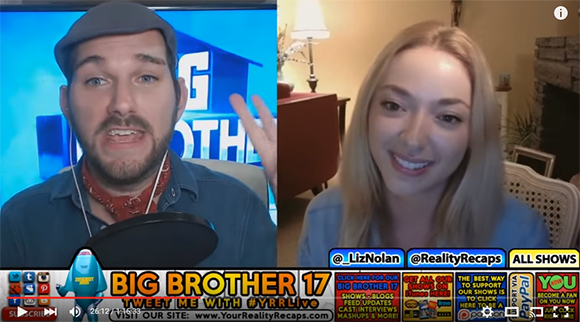
YourRealityRecaps

His site, podcast and videos have become so popular that he now lands interviews from actual contestants on the reality shows!

Eric provides exclusive content and interviews to those who sponsor him through Patreon. Currently the Patreon sponsorship brings in about $800/month. He also takes PayPal donations.

This is a great example of an everyday person who is using something he enjoys, his talents (interviewing & presenting on video) and his passion (reality TV) to make money online.

Often times the lack of motivation means you aren’t using your talents and what you love to fuel your journey. Find what makes YOU tick.

And for goodness sakes, stop forcing yourself to master something you don’t even like doing! There is a misalignment here that’s demotivating the crap out of you! So you’re already starting out on the wrong foot.

I know some people won’t agree with this, but I think many of you need to forget about making money for now and just get online and do something fun.

Drop the perception that you have to make money online using conventional methodsClick To Tweet

So many successful businesses start out with the person just casually doing something they enjoy.

Over time, you’ll discover what your audience likes, needs, what’s missing in the market and before you know it… you’re building a business!

Your Homework:

Listen to at least 3 podcasts that feature someone who is successful online.

Start with The Smart Passive Income podcast, Entrepreneur on Fire and Unmistakable Creative.

All feature people who are successful in many different niches and with different kinds of sites. These interviews are extremely motivating because you see success comes in many different forms and avenues.

Or…

Go to Meetup.com and look for meetups in your area on entrepreneurship, blogging or whatever you want to do.

A subscriber asked me how I learn so much. She wondered if I belonged to some secret club! :-) :-) :-)

Nah. I don’t belong to any club, but I’m a big believer in going to meetups to get fresh ideas and perspectives.

That’s how I learned to make money with Facebook. Never thought I’d be doing this.

If You Lack Traffic…

Traffic

The lack of traffic was the most popular response from you.

Google used to make getting traffic relatively easy, but times have changed.

That’s OK. The good news is there are so many different options now. What’s ironic is that can also be a disadvantage because it’s overwhelming and you don’t know where to start.

I say, start with ONE method…

I met a woman at a meetup who struggled with getting traffic like many of you.  (Gosh, I hate that I didn’t jot down her site or get her business card.)

She has a health and wellness blog and uses Periscope to live stream at the same time every night during the week. She spends an hour answering questions and presenting helpful info about living a healthy lifestyle.

The whole purpose of her “scope” is to promote her email list. At the end of every broadcast she tells people how to sign up.

Since she started “scoping”, she has doubled the size of her email list and blog traffic.

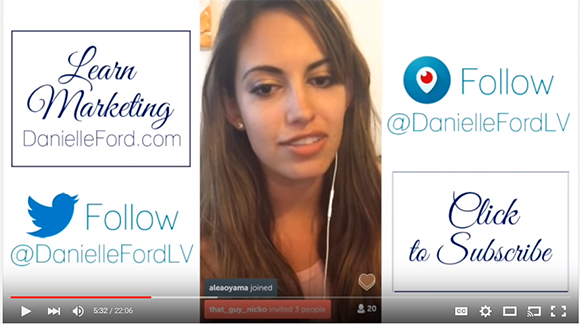
Danielle Ford is another blogger who uses Periscope regularly (she has over 7,000 followers) and then uploads her scopes to YouTube.

I love how she overlays her Periscope replay video onto a transparent PNG image and uses clickable annotations on YouTube to promote her site and email list. Clever!
Danielle Ford on YouTube

Your Homework:

Focus on one traffic method outside of SEO for two months.

And please…

You’ve got to stop the obsession with trying to build your entire traffic stream with SEO.

SEO has changed for good, and Google wants you to pay. That’s how they make money. It doesn’t mean you can’t get some free, organic traffic (here’s the only free guide you’ll ever need), but it won’t be enough to build or sustain your business.

I know you don’t want to hear that, but it’s real talk!

You want to know something?

My Google traffic for this blog is the lowest it’s been in years, but my blog has had a record year in overall traffic from email. (I use AWeber’s Blog Broadcast feature to send auto notifications of new blog posts.)

Not to mention the record amount of passive income that has come from simply linking to my courses in the signature of my messages and autoresponder.

I hate, hate, hate, hate that I ignored email for so long. But I’m sooooooooo glad I started over with my email list in 2011.

Now…

The reason I suggest trying something for two months is it takes time to learn something and build up a rhythm. Just trying something once or twice is not enough to know if it’s going to work for you. Consistency is key.

Here are some helpful articles that don’t involve Google traffic…

I wish I could tell you that building traffic is about doing something once or twice and then your traffic will take off, but it doesn’t work like that. It’s a marathon, not a sprint — meaning it takes time and it’s an ongoing process.

So commit to one new thing for the next couple of months and see what happens!

If You Lack Content Ideas…

writer's block

I actually have the opposite problem on this blog. Sometimes I have so many ideas, I don’t know which one to write about next.

You should see my Drafts section in WordPress! It’s flooded with notes and post ideas.

For a long time I could not relate to those of you who said you didn’t know what to write about. That seemed like such an odd problem to have.

That is…

…until it happened to me!!

You may remember that niche experiment that I refer to every now and then.

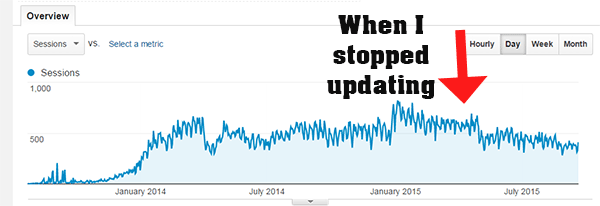
It peaked at 800 visits per day in January and I remember staring at the traffic graph wondering what the heck I was going to write about next. Gosh, I was bored to tears.

Because I tend to enjoy creating sites that teach others, I have to be active in the topic regularly and learning something new all the time  — otherwise the well of ideas will run dry very quickly.

I like adding my own experiences in my content. If I don’t have that to fall back on, the content starts to read like Wikipedia.

Booooooooring!!!

The topic in the experiment was something I had mastered in my personal life, but I was not learning anything new anymore. Therefore I had nothing else to write about.

I get content ideas for this blog by reading other blogs, trying something new or learning new things. And when you pick a topic that allows you to do that, you’ll never run out of things to write about.

You can also do what I did with my email list. Ask your audience what they struggle with? Thanks to your replies, I’ll have content ideas for the next several months!

Your Homework:

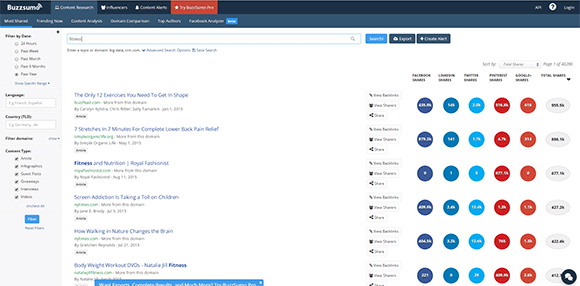
BuzzSumo is a great resource for discovering content ideas.

Simply type in a keyword and view the most popular content for that phrase. Use it to get ideas for what to write about.
buzzsumo

Next…

Ask yourself why you chose the topic of your website and answer honestly. Was it only income potential? Are you copying someone else who is already successful in that space?

Can you see yourself talking about this topic months from now? If not, pick another one!

If you chose a topic because of your experience, write down 10 personal experiences you’ve had in the niche over the past year.  How can you turn at least one of those experiences into a blog post with a lesson for your audience?

Content doesn’t always have to be of the how-to variety. Sometimes your most vulnerable posts about failures and struggles can be the most interesting.

Adrienne Smith recently published a really fabulous post about using vulnerability to open up opportunities and improve engagement on your site.

One of the sub headlines reads “When I Ignored My Fear, My Posts Went Viral.”

Is that an attention-grabbing sub-head or what? You’ve got to read this!

Here are some helpful articles if you’re feeling stuck…

If You Lack Technical Skills…

tech skills

You might THINK this is a big hindrance, but it doesn’t have to be. I’ve noticed that the lack of technical expertise often stops people in their tracks.

Actually, most successful people online aren’t that technically savvy. They hire people to do what they can’t do, and you should too.

But…

If you hire someone to setup your site, you should still learn how to do the basics of site management.

I’ve heard too many stories of people paying someone to setup and manage their site, only to have the person disappear off the face of the earth. As a result, they have no idea how to even access their site, much less update it.

As you may know, if you host your site at Website Palace, I provide a free, 27 minute video on setting up your site with WordPress. Trust me. If you can move a mouse and type, you can build your site with WordPress.

Your Homework:

Stop letting your lack of technical skills prevent you from moving forward.

Introduce yourself to Upwork. I use them all the time for various tasks — including the ever-so-tedious task of transcribing my podcasts. I just used them this weekend for a coding issue I had no time to figure out myself.

What I love about this site is you are never obligated to hire anyone.

You can submit your job request just to get an idea for what it should cost and communicate with available freelancers.

Here are some guidelines…

  • Be very, very detailed with what you need done, and ask the applicants questions using the messaging feature built into Upwork.
  • Pay attention to how quickly and thoroughly they respond.
  • Read their recent ratings to get an idea of how proficient they are.
  • If you’re hiring someone for web design, always ask for a portfolio (fortunately UpWork now has a feature where applicants can attach them).
  • Don’t accept any jobs until you have several (at least 15) applicants. The more the better so you can get a better idea of what it should cost.
  • Don’t always go with the cheapest quote! It’s tempting, I know, but consider the experience and feedback. Some people are worth the extra $10 or $20.
  • I only hire people who address my project specifically in their cover letter/intro. It shows they actually read it. I don’t like stock replies like “I can complete your job.”

Fiverr can also be a good resource to get things done cheaply, but just be careful. It’s very hit or miss. Also because it’s so cheap, a lot of the people use templates so you end up paying for something that is unoriginal.

If I Didn’t Address Your Problem…

This is not the last time I’m going to address your replies. In fact, they are still coming in!

If I didn’t mention what you struggle with and there are others with that same problem, I’ll probably write individual posts on those topics later on.

I really do want to thank those of you who took time to answer. I can’t tell you how invaluable that exercise was. My head is literally spinning with content and video ideas.

And if you asked a very unique question, I am going through some of them and answering individually. I obviously can’t answer everyone’s email, but I’m doing my best to work through some.

I hope this post provided some insights, help and motivation.

Onward and upward!

16/10/2015

3 Passive Income Streams & My Facebook Page Earnings Update

3 Passive Income Streams & My Facebook Page Earnings Update

Link to 2 Create a Website Blog

3 Passive Income Streams & My Facebook Page Earnings Update

Posted: 15 Oct 2015 09:25 AM PDT

Making Passive Income With Your Website

This podcast discusses three of my passive income sources: T-shirt sales update (via my new Facebook niche page), GoDaddy and Udemy (courses).

I had a small breakthrough with my Facebook experiment during the last week of September, and in just 36 hours, it generated over $350 in T-shirt commissions.

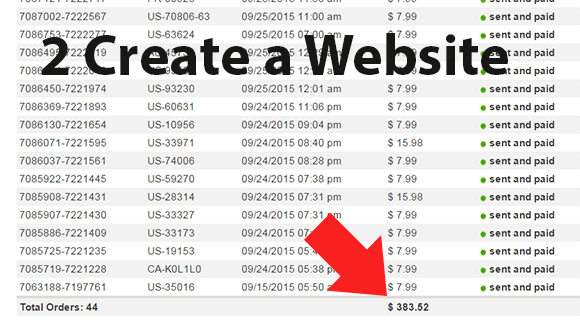
Spreadshirt Orders

Now sales are starting to come in a little more regularly. Plus, I gained more than 2500 organic (free) likes since the last podcast.

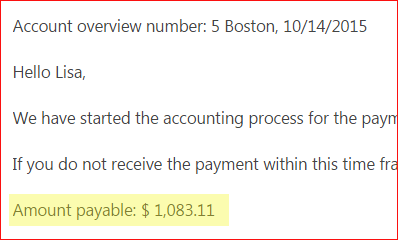
Thanks to this page, I received my largest payment from Spreadshirt to date. Now it’s time to get ready for the “ugly Christmas sweater” season!

Record Spreadshirt Payment

This is exactly what I love, love, love about Internet Marketing. There are so many ways to earn, and they don’t always have to involve the conventional methods (content publishing, blogging, etc.)

Since earning with Spreadshirt for the first time last year, I’ve been completely obsessed with the T-shirt monetization model. I was determined to scale this somehow, and it’s finally starting to pay off.

The bonus?

I’m having FUN doing it — always a prerequisite for me or I’ll give up too soon.

I’m a very right-brained person, and I like to tap into my creative side when I can. Coming up with the ideas and funny sayings for the shirts is what makes this fun and challenging.

The Lesson: If you enjoy doing something, stick with it! Usually it takes a little time to reap the rewards.

Note: If you don’t want to listen to the podcast now, you can right-click this link, Save As and download it for later.

Feedburner users can click here from your email to listen.

In This Podcast

  • My earnings with the Facebook niche page experiment after 2 1/2 months
  • The right way to post an image on Facebook to get a better reach
  • Why my 2nd FB page attempt proves I’m not ready to formally teach this yet
  • Get more details on my highest earning program and how you can earn too
  • Is it better to become a hosting affiliate or reseller?
  • Updates on my experience with Udemy after one full year and my goal for 2016

Show Notes

29/09/2015

Do You Need Backlinks to Rank? Why Opinions Vary

Do You Need Backlinks to Rank? Why Opinions Vary

Link to 2 Create a Website Blog

Do You Need Backlinks to Rank? Why Opinions Vary

Posted: 28 Sep 2015 09:13 AM PDT

Why People Disagree Over Backlink Building

You keep asking for it!

So I’m doing this post for those of you who want to learn more about why your website is not ranking for your targeted keywords. I’ll also explain why some people say you need to build backlinks and others say you don’t.

And finally, I’ll update you on my experiment I started in July, 2013 where I built up search traffic without any backlinks at all.

Understanding Backlinks

By now, you’ve probably heard or read that if you want to rank on Google, you need backlinks.

A backlink is a link from one site to another. In Google’s eyes, backlinks are votes for your site.

How many you need for worthwhile traffic depends on how competitive the keywords are, the quality of the backlinks you receive and your site’s Domain Authority.

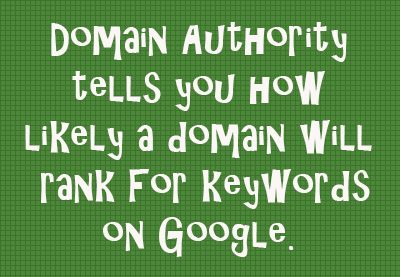
Domain Authority (DA) is a metric that was developed by Moz, and it takes into account domain age, popularity, etc.

Domain Authority Definition

If your site’s DA is 90 (the max is 100), it will be much easier for you to rank for a medium or even highly competitive phrase, compared to a site that has a DA of a 30.

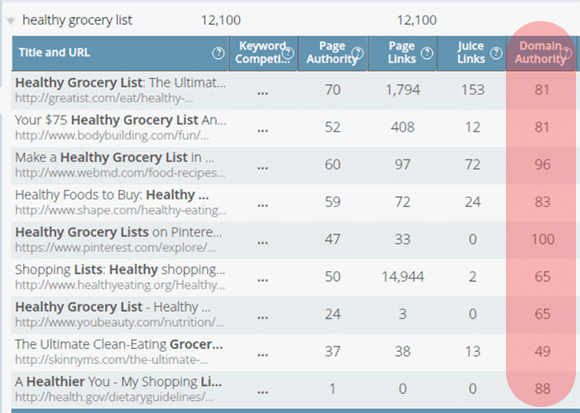
I use Long Tail Pro (affiliate link) to check DA because it shows you the values for the top 10 results for any keyword search.  It helps you easily gauge how competitive a niche or keyword phrase is.

In the screenshot below, the keyword “healthy grocery list” gets a decent amount of searches per month, BUT look at how high the DAs are for the websites in the top 10. That would be a tough phrase for a new or unpopular site to rank for.

All the DAs are medium to high, and there are no websites ranked in the top 10 with a DA below 40.

Long Tail Pro Example

You can also check the DA of individual domains for free using this site.

So the reason some of you are struggling with organic Google traffic is you are going after keywords you will never, ever be able to compete with because your site’s authority is too low and you’re targeting keywords that are too competitive.

Sean Has Had It and Is Now Building Backlinks

Now let’s talk about getting backlinks. Should you build them? What about earning them naturally over time?

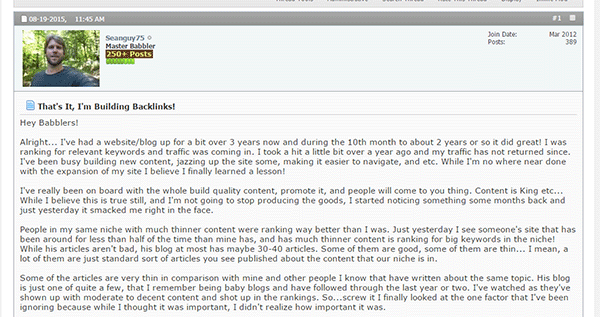
Website Babble member, Seanguy is changing his approach. He’s tired of working hard on his content and seeing new competitors with lower quality content rise above him in the search results. He concluded through research that they are building links manually.

Building backlinks means you seek out ways to get people to link to your site instead of letting it naturally happen over time. This could mean you email other site owners and ask them for a link to your site on their research page or create an Infographic and ask other bloggers to link to it.

There are many ways people build links and Sean is on a mission.

So he created a very honest post on the forum back in August about how he is going to start building backlinks because he believes that’s the only way he is going to compete.

Seanguy

Many of you know I’m not a fan of this approach, but I can also understand why people resort to it. It’s super frustrating to see websites with lower quality content outranking you.

After all, the search engines are bots. They aren’t humans. So they will never get it 100% right with regards to ranking websites.

How many of you are frustrated with your competitors like Seanguy?

Choosing Long Tail Keywords Require Fewer/No Backlinks

I can tell you from experience that you can build traffic without manually building links if you go after long tail keywords.

It doesn’t work as well as it did years ago, but well enough to make what I call “passive side money” without building backlinks.

A long tail keyword is a very specific phrase that gets searched for much less than a more competitive one. So if you have a site about weight loss, a keyword like “how to lose weight” is too competitive due to the number of monthly searches and the big brands ranking in the top 10.

But a long tail keyword like “how to lose weight drinking tea” is more specific and less competitive. So the idea is you methodically write posts that target less competitive phrases.

I attended a webinar recently and one guy said he only goes after keywords that get searched for less than 100 times per month, and his site consistently gets 2,000 visits per day using this method.

So even though you may only get 5 visits per day from these keywords, they are much easier to rank for, and if you repeat the process across multiple keywords, the traffic adds up over time.

So that’s all fine and good, but the argument to this approach is many of these keywords you can rank for today are not “money keywords” – meaning they don’t generate traffic that easily converts into sales.

A valid argument indeed, but this strategy is still worth implementing.

I WOULD NOT SUGGEST BUILDING YOUR PRIMARY SOURCE OF INCOME THIS WAY.

My SEO Experiment With The Long Tail

You may remember my experiment I started back in July of 2013, where I was able to build traffic up to 500 uniques per day in about 6 months. I didn’t manually build backlinks. I just wrote keyword-focused content.

I made the site anonymous to keep the stats pure, and even created a separate Google Analytics account just to make sure the nothing I have currently done will influence the ranking in any way. (At the time, Google Authorship was still live and kickin so I wanted to make sure I didn’t have anything linked to my sites.) I didn’t even use AdSense.

It took me about 6 months to rank on page 1 (position #7) for my main seed word. The traffic peaked in January, 2015 at 800 visitors per day, but as you’ll see below, it didn’t last.

That traffic may not sound very impressive, but if you take into account that I put in a total of 10 hours (mostly in the first 2 months), it’s not too shabby. I just wish I had chosen a niche I was more interested in. The results would have probably been more impressive because I’d have more content.

I did outsource content for a few months on TextBroker just to keep traffic up, but stopped earlier this year.

That site still exists and is getting around 400 unique visitors per day, and still generating passive affiliate income. I only added one article this year, which is no doubt a reason for the big dip in traffic. Most of the content was added in 2013 and 2014.

Here’s a screenshot of the traffic to the site starting in July 2013 to now.

Traffic Graph

That surge in traffic you see at the very beginning of the graph in August 2013 was something I was trying with Pinterest and Pinwoot. DON’T GO TO PINWOOT. I just tried to pull it up and got a Norton warning. Yikes!

Since I wasn’t building backlinks I wanted to try something with social media just to get the site on the map. I earned credits on Pinwoot by sharing other people’s content on Pinterest. In return, other people shared mine. So the traffic was coming from that Pinwoot experiment.

As you can see it took a good 6-7 months (January 2014) for the Google traffic to pick up. That’s a lesson in why you don’t give up after 2-3 months. It takes time!

I will probably have my V.A. (virtual assistant) start updating the site regularly again because the income is worth keeping the site around. As you can imagine, the earnings have dropped off with the decrease in traffic.

This was the first site where I methodically created content with SEO in mind on every page. It felt a little weird and robotic because I normally choose content based on interest, not keywords, and let the ranking chips fall where they may.

I understand why people do keyword research before writing content, but geez it is incredibly tedious! I’ve never been a fan of doing all the research. I just want to write and forget about keywords! :-)

But since this was an experiment, I decided to be more deliberate with my approach.

Why Link Building Stories & SEO Advice Varies So Much

You may have read stories about people (like me) building traffic without fussing with backlinks. On the flip side, some people will tell you that you MUST build them. It’s often an ongoing part of their site upkeep.

So why the inconsistent advice and suggestions across the Web about backlinks?

There are many reasons…

  • Some people get lucky and have an interest in niches that don’t require as many backlinks due to low competition. So they take a topic and run with it.
  • People get into a niche early before it gets too crowded.
  • Some are just insanely creative/useful with their content, videos, social media, etc. and have no problem getting followers and links naturally. They don’t need to build backlinks.
  • Others really take time to do the research and understand how the long tail works. They strategically choose niches and select keywords for each article very carefully.

And here’s a big reason link building stories vary: I’ve learned through my own experience that certain niches are more sharable.

Visual Niches Have Link Building Advantages

What I mean is the people in the niche are on social media more and sharing happens more frequently. I’ve found this to be true with visual topics like hair, makeup, fashion, beauty, etc. It’s just the nature of the topics. Not all niches have that advantage.

The site in my experiment did not have that advantage, but when you choose the right keywords, you can rank without backlinks.

So yes, opinions vary for many different reasons. Someone like me is going to tell you to not to build backlinks because I’ve had moderate success. Obviously my opinion is greatly influenced by my own experiences.

Your Expectations & Goals Matter Too

How much traffic and income are you seeking and what do you define as success? This will also influence your outlook. Is 500 visits per day enough? Are you looking to live off the income?

I was very satisfied with my experiment results given the minimal time invested. I never expected to make a living with these kinds of sites in 2015.

So if you’re looking to make significant long-term income, then you may have a different perspective on all this.

Where Do You Stand?

I was wondering how many of you feel like Seanguy and have given up on the “build and they will come” philosophy for SEO? Or do you even care about SEO anymore?

I’m also posting this to gauge interest in videos on understanding how to use the long tail with Long Tail Pro (affiliate link). You don’t need this software for research, but it speeds up the research process for keyword selection.

When I make suggestions for products people need to make money online, I often categorize them in two ways: necessities and luxuries. Paid hosting, in my opinion, is a necessity. Long Tail Pro would fall in the Luxury category.

If you can afford it, grab it. If you can’t, use free tools like The Google Keyword Planner. You just won’t get the additional info about competition (domain authority, backlinks, etc).

I get the sense a lot of you have given up on SEO (search engine optimization) and have opted to focus more on diversification through podcasting, social media, live streaming, YouTube, etc. No doubt that’s the best approach for sustainable success, but some of you may still focus on SEO.

No matter how much I preach about traffic diversification, there are always people who simply want to focus on Google traffic.

That’s your right, and I get why it’s so desirable. It can lead to a lot of passive income, but it comes with huge risks if that’s the ONLY way you plan to build traffic.

Where do you stand with all this? Are you also frustrated with not being able to rank? Are you noticing your competitors building backlinks? Or have you moved away from SEO?

You can follow Seanguy’s backlink building journey on Website Babble.